Understanding Mello-Roos Tax in CA: Key Insights


Understanding the Mello-Roos tax is crucial for homebuyers in California, as this special assessment directly impacts home affordability and long-term financial planning. Named after the Mello-Roos Community Facilities Act of 1982, this tax provides local governments with a vital tool to fund public infrastructure in new developments without raising general property taxes.
What is Mello-Roos Tax?
A Mello-Roos tax is a special assessment levied within Community Facilities Districts (CFDs). It was created as a workaround to Proposition 13, which limited general property taxes to 1% of a property's assessed value.
- Basis of Tax: Unlike standard property taxes, Mello-Roos is typically assessed based on land value or lot characteristics (such as square footage or use) rather than the total market value of the home and its improvements.
- Approval: A district can only be formed with the approval of two-thirds of the voters within that specific area.
- Non-Deductible: Mello-Roos taxes are generally not deductible on federal income taxes because they are assessed for local benefits that tend to increase property value rather than being true ad valorem taxes.
What Does the Tax Fund?
In growing areas like Sacramento and Placer County, Mello-Roos districts are common in newer suburban developments to ensure that growth pays for itself. The funds are dedicated to specific public amenities, including:
- Educational Facilities: Building new schools or upgrading existing ones.
- Infrastructure: Roads, bridges, sidewalks, and sewer systems.
- Community Services: Parks, recreation centers, libraries, and public safety services like fire and police protection.
Duration and Financial Impact
For many homeowners, the most important question is how long these payments will last.
- Typical Term: Most Mello-Roos bonds have a predetermined lifespan, usually ranging from 20 to 40 years.
- Expiration: The tax typically expires once the bond debt used to finance the infrastructure is repaid in full. However, some districts may continue to charge a reduced fee for ongoing maintenance of facilities.
- Foreclosure Risk: Failure to pay Mello-Roos taxes can lead to accelerated foreclosure because the bonds are secured by a lien against the property.
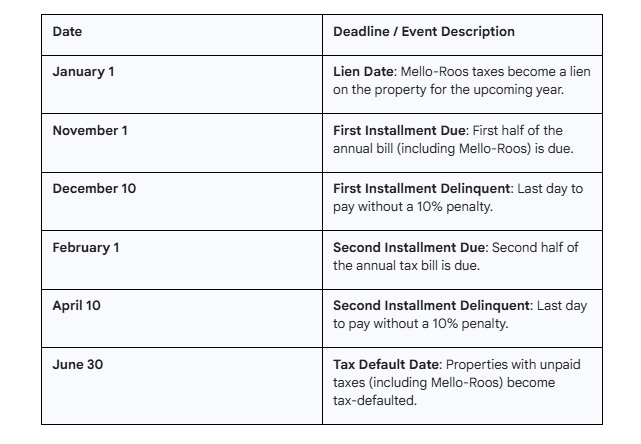
Key Mello-Roos Dates and Deadlines (2026)
Because Mello-Roos is typically included as a line item on your annual property tax bill, it follows the standard California tax calendar.
How to Check if a Property has Mello-Roos
California law requires sellers and real estate agents to provide a Notice of Special Tax to potential buyers if a home is in a Mello-Roos district. You can also verify this by:
- Reviewing the Tax Bill: Look for "MR" or "CFD" line items in the "Direct Charges" section of the property tax statement.
- Using online parcel lookups: Sacramento residents can use the county's e-PropTax portal. Placer County residents can use the Placer County Property Tax Portal and separate Assessor 'Self Service' parcel lookup tools.
- Searching by APN: Use your Assessor’s Parcel Number (APN) on county websites to find specific district maturity dates and rates.
Conclusion
Mello-Roos districts offer the benefit of modern schools and well-maintained infrastructure, which can enhance neighborhood appeal and property values. However, the added annual cost is a significant factor in your monthly debt load. Before buying, always ask how many years remain on the tax and if the rate is subject to annual inflation adjustments.

Written by David Webb
David is the founder and CEO of LowPropTax, a veteran-owned property tax appeal company helping homeowners and real estate investors lower their property taxes through AI-powered assessment analysis. With eight years of military service and hands-on experience acquiring and rehabilitating over 30 investment properties, David understands firsthand how over-assessed properties drain cash flow and eat into returns. That experience drove him to build a property tax reduction service that combines cutting-edge technology with certified appraisal expertise to deliver real savings for property owners across California.
Under David's leadership, LowPropTax has achieved an 86% success rate on property tax appeals, helping clients save an average of $1,102 annually on their property tax bills. His approach to property assessment challenges is rooted in data-driven analysis, using AI to identify over-assessed homes and investment properties that qualify for tax reductions. As a real estate investor himself, David built LowPropTax to be the kind of transparent, results-focused property tax appeal service he wished existed when managing his own portfolio—no hidden fees, no confusing jargon, just expert support from estimate to hearing.
David's mission is to make property tax appeals fast, convenient, and accessible for every property owner who suspects they're overpaying. Whether you're a first-time homeowner, a small landlord, or a real estate investor managing multiple properties, LowPropTax provides the professional property tax analysis and appeal services needed to ensure your assessment is fair and accurate. David and his team handle everything from comparable property research to hearing representation, so clients can focus on what matters most while LowPropTax fights to lower their tax burden.