How to Reduce Your Property Tax Bill: Effective Strategies

How to Reduce Property Tax Bill: Proven Strategies for Real Savings
Learning how to reduce property tax bill could save thousands of dollars each year. Many property owners overpay due to inaccurate assessments, missed exemptions, or confusion about the appeals process. Understanding the factors that affect your property tax bill is the most effective first step toward cutting those costs.
Opening an annual property tax bill can feel like uncovering an expensive mystery. Many feel a sense of dread when they notice another unexplained increase. The number isn’t set in stone—challenging it is not only possible but often much simpler than expected. In fact, 60% of properties in the U.S. are overassessed, yet only 5% of owners challenge their bill, causing millions to overpay year after year.
The real secret? Most successful tax appeals start with informed property owners who know how to spot errors, claim hidden exemptions, and leverage relief programs. Whether managing rental units, owning a single-family home, or overseeing commercial buildings, a clear plan makes lowering taxes far less daunting.
This guide reveals how to reduce property tax bill by highlighting why your taxes might be inflated, demystifying the appeals process, uncovering valuable exemptions, and exploring new tech and AI-driven solutions. By the end, you'll have actionable strategies to put more money back in your pocket—no expensive consultants required.
Ready to stop overpaying? Start by discovering why your latest tax bill may be higher than it should be.
META_DESCRIPTION: Discover how to reduce property tax bill with proven strategies. Learn about common errors, exemptions, appeals, and tech tools to save thousands on your taxes.
Why Your Property Tax Bill is Higher Than It Should Be
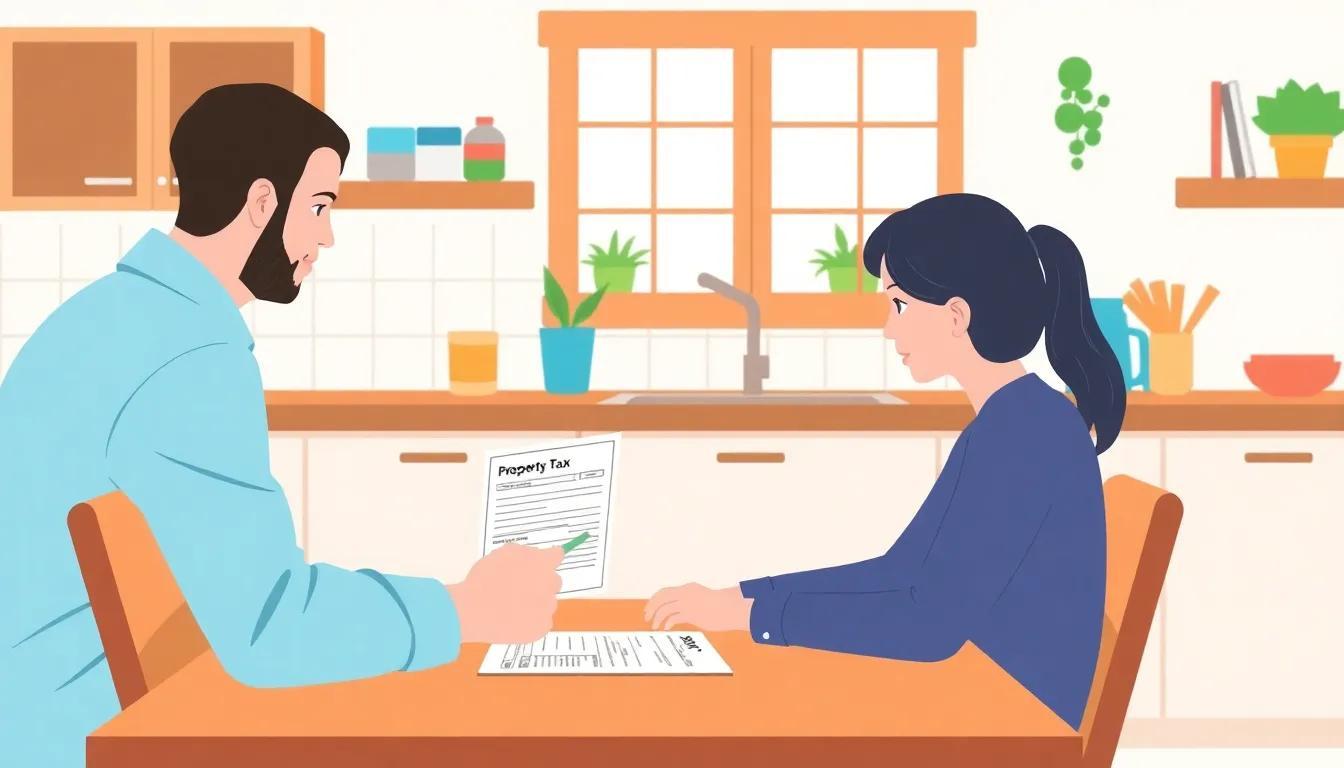
Property tax bills are often higher than necessary because of inaccurate property tax records. Local governments rarely have the resources to keep every record perfectly up to date, so errors and outdated information are common.
On average, 30% of property tax records contain errors that directly impact tax bills (Investopedia). That's nearly one in three properties being overcharged.
How Wrong Data Bloats Your Tax Bill
Assessment errors are widespread. County assessors rely heavily on recorded data, which may list incorrect square footage, phantom renovations, or misclassified home types. For example, if a tax card lists an extra bathroom or a larger living area than actually exists, the owner pays higher taxes for features that aren’t real.
Case in Point: The $1,200 Wake-Up Call
A homeowner discovered their property was mistakenly classified as "multi-family" instead of "single-family," resulting in a higher tax rate. After correcting the error, their annual tax bill dropped by $1,200.
Signs Your Tax Assessment Might Be Wrong
Look out for these red flags:
- A sudden spike in your property tax bill that doesn’t match market trends or recent upgrades
- Features listed on your property record that don’t exist (extra bathrooms, finished attics, outbuildings)
- Incorrect property type (e.g., assessed as commercial when it’s residential)
- Neighbors with nearly identical homes paying significantly less in taxes
Wondering how to reduce property tax bill? Start by reviewing your property records for these common mistakes.
How to Check (and Fix) Property Tax Errors
Step 1: Request your property tax card from the county assessor's office. This report details your property's square footage, construction year, improvements, lot size, and more.
Step 2: Review for accuracy. Check:
- Square footage: Does it match blueprints or a recent appraisal?
- Bedrooms and bathrooms: Are any listed that don’t exist?
- Renovations and additions: Are recent changes recorded—or are there features you never added?
- Lot size and boundaries: Errors here are common and can lead to inflated assessments.
Step 3: Document discrepancies. Use photos, blueprints, or recent appraisals as evidence.
Step 4: File a correction request with the local assessor, or initiate a formal appeal if needed. For step-by-step instructions, see this guide on how to prepare property tax appeal evidence.
Tip: In California, regular checks are essential. Errors can lead to expensive reassessments or inflated bills—particularly relevant for those searching "how to avoid property tax reassessment California Prop 13" or "how to lower property taxes in California."
Don't Get Burned by Bad Data
Counties and cities push assessments forward, but their records are rarely perfect. Savvy owners routinely check tax cards and fix mistakes. Reviewing your property tax card every few years can mean the difference between overpaying and saving thousands. For more on how cities and states are reducing property taxes, review this expert breakdown.
Checklist: How to Spot and Fix Errors on Your Property Tax Card
- Obtain your property tax card from the county assessor
- Match all details (square footage, rooms, improvements) to your actual property
- Gather supporting documentation for discrepancies
- Submit correction requests or file a formal appeal with evidence
How to Appeal Your Property Tax Assessment Successfully
Receiving an unexpectedly high property tax bill is more common than most realize. Nearly 60% of properties are over-assessed, according to the National Taxpayers Union Foundation. Appealing the assessment is not just a right—it’s often the smartest move.
Why Comparable Sales Data Works
Recent sales of similar properties (comps) provide the strongest evidence. More than half of successful appeals in 2026 relied on this approach. Local assessors base property values on comparable sales from the past year. Demonstrating that several similar homes sold for less than your assessed value gives you a compelling case.
What Evidence Should You Gather?
Collect these key items:
- Recent sales data for properties similar in size, age, and location (within the last year)
- Photos and listings showing property condition, especially if your home needs repairs or lacks upgrades
- Professional appraisal, especially for higher-value homes
- Assessment records highlighting errors in square footage, features, or improvement lists
Stat: Over 50% of successful property tax appeals in 2026 used comparable sales as primary evidence.
Case Study: Texas Homeowner Cuts Tax Bill by 15%
A Texas property owner believed their home was overvalued during a market surge. By hiring a licensed appraiser and presenting recent lower sales as evidence, the owner successfully appealed, leading to a 15% reduction in assessed value—resulting in long-term savings.
Step-by-Step: How to Prepare and File Your Appeal
- Review your assessment notice and compare details with your records.
- Find recent comparable sales using Zillow, Redfin, or county records.
- Organize evidence: Print sales data, take property photos, and label everything by date and address.
- Complete the appeal form from your assessor’s office, noting deadlines.
- Submit your evidence with the appeal. Present data, not opinions.
- Attend the hearing: Stay professional and focus on the facts.
For more on the appeals process, see this guide on how to file a property tax appeal quickly and efficiently.
Pro Tip: For commercial or complex properties, it may be worth consulting a property tax specialist. The potential savings can far outweigh the cost. Learn more about getting professional property tax appeal help.
Key Takeaways:
- Always review your annual assessment for accuracy
- Use recent sales data as your strongest evidence
- Meet deadlines and follow your local appeal process
- Consult experts for complex properties
What Are the Best Property Tax Exemptions Available?

Exemptions like homestead, senior, and veteran relief can substantially reduce your property tax bill. In 2026, some states, such as Florida, allow up to $50,000 off the taxable value simply by claiming a primary residence exemption. These savings can be combined with a successful appeal for maximum benefit.
How Much Can Homestead Exemptions Save?
Homestead exemptions lower assessed value for owners who live in their property as a primary residence. In Miami-Dade County, a $350,000 home could see a $1,000–$1,400 annual tax reduction (miamidadepa.gov). In California, Proposition 13 provides a similar cap, limiting how much assessed value can rise.
Senior Citizens and Veterans: Additional Exemptions
Many states offer extra relief for seniors (65+), disabled homeowners, and disabled veterans. For example, Tennessee's property tax relief program pays up to $1,500 directly to qualifying elderly or disabled homeowners (comptroller.tn.gov).
Important: Homeowners can often combine homestead, senior, and veteran exemptions if eligible and filed on time.
Comparison Table: Common Exemptions (2026)
- Homestead — Who Qualifies: Primary residence owners · Typical Benefit (2026): $25,000–$50,000 reduction · Special Notes: May cap annual assessment increases
- Senior Citizen — Who Qualifies: Owners age 65+ · Typical Benefit (2026): $10,000–100% of value · Special Notes: Income limits may apply; some cities offer “freeze”
- Disabled Veteran — Who Qualifies: Service-connected disabled · Typical Benefit (2026): $5,000–full exemption · Special Notes: Must show VA/military docs; varies by state
How to Claim Exemptions
- Check your county or state assessor’s website for available exemptions and deadlines
- Prepare documentation: Proof of residence, age, income, or veteran status as required
- File applications online or in person
- Reapply annually if needed; exemptions can expire if not renewed
For more on eligibility and application, see how to get property tax exemption.
▶ Property Tax Saving Exemptions | Cook County Assessor's Office
Checklist: How to Maximize Exemptions
- Research available exemptions on your county/state website
- Gather required documents (proof of residence, age, military service)
- File before the annual deadline
- Verify that exemptions are correctly applied to your tax card
Missing an exemption is like handing free money to the county. For anyone focused on how to reduce property tax bill, a thorough exemption check is the first step.
How Does Location Affect Your Property Tax Bill?
Property taxes vary dramatically by location due to local rates, school budgets, city services, and special assessments. Two nearly identical homes in different cities can generate tax bills with thousands of dollars’ difference.
Stat: Homeowners in New Jersey pay an average effective property tax rate of 2.21%, while Alabama's average is just 0.41% (ITEP).
Example: The New Jersey vs. Alabama Tax Gap
A $400,000 home in Newark, NJ, typically racks up $8,840 in annual property taxes. In Huntsville, AL, the same property would cost just $1,640 each year—a $7,200 difference.
Table: Average Property Tax Rates by City (2026)
- Newark, NJ — Avg Property Tax Rate (%): 2.21 · Tax on $400k Home: $8,840
- Chicago, IL — Avg Property Tax Rate (%): 2.05 · Tax on $400k Home: $8,200
- Dallas, TX — Avg Property Tax Rate (%): 1.96 · Tax on $400k Home: $7,840
- Miami, FL — Avg Property Tax Rate (%): 1.08 · Tax on $400k Home: $4,320
- Los Angeles, CA — Avg Property Tax Rate (%): 0.72 · Tax on $400k Home: $2,880
- Huntsville, AL — Avg Property Tax Rate (%): 0.41 · Tax on $400k Home: $1,640
Source: Urban Institute, 2026 reporting
Can You Do Anything About It?
Yes—location-based taxes can often be managed or avoided with smart planning. Here’s how:
- Relocate or invest in low-tax areas: States like Alabama, Nevada, or Colorado offer much lower effective rates.
- Research reassessment triggers: In California, understand how Prop 13 and Prop 19 affect tax bases, especially after ownership changes.
- Check for additional district taxes: Some neighborhoods have extra levies, such as Mello-Roos. Learn how to check for Mello-Roos.
- Optimize purchase timing: Closing before a new tax year can sometimes delay reassessment.
Checklist: Location Strategies to Reduce Property Taxes
- Compare rates in different counties before buying or investing
- Investigate special assessments or district taxes in your area
- Understand reassessment rules for your state
- Use online property tax calculators to model potential tax bills
How to Use Tax Deferrals and Circuit Breakers to Your Advantage
Tax relief programs like circuit breakers and tax deferrals offer real savings, especially for those with fixed incomes or high local tax rates. For example, New Jersey's average property tax rate is 2.21%—the highest nationwide—while Hawaii’s is just 0.31% (Tax Foundation).
What Are Circuit Breakers and Tax Deferrals?
- Circuit breakers: Cap property tax owed based on income, so taxes never exceed a set percentage of your earnings. Used in states like Minnesota, Oregon, and Tennessee.
- Tax deferrals: Allow eligible homeowners (usually seniors or disabled) to postpone paying property taxes until selling or refinancing, often at low or zero interest.
Real-World Scenario
A retired couple in Oregon faced rising property values with fixed income. By enrolling in Oregon’s senior tax deferral, they delayed paying thousands in annual property taxes until selling their home, preserving cash flow.
Comparison Table: State Programs (2026)
- Minnesota — Circuit Breaker: Yes (income cap) · Tax Deferral Programs: Yes (seniors/disabled) · Notable Use Case / Limit: Caps for low-income owners
- Oregon — Circuit Breaker: No · Tax Deferral Programs: Yes (seniors/disab.) · Notable Use Case / Limit: Defers tax until sale
- Tennessee — Circuit Breaker: Yes (age/disability) · Tax Deferral Programs: No · Notable Use Case / Limit: Credits for seniors/veterans
- California — Circuit Breaker: No statewide · Tax Deferral Programs: Limited/local · Notable Use Case / Limit: Local options only
- New Jersey — Circuit Breaker: Yes (age/income) · Tax Deferral Programs: Limited · Notable Use Case / Limit: Credits for qualified seniors/disabled
How to Apply
- Check local tax assessor’s website for program details
- Gather documentation: Proof of income, age, disability, or property use
- Apply annually, as most programs require reapplication
Many property owners miss out simply by not checking eligibility. For those seeking how to reduce property tax bill, researching circuit breakers and deferrals is essential.
Checklist: Using Relief Programs
- Review eligibility for circuit breakers and deferrals in your state
- Collect necessary documents (income, age, medical proof)
- Apply on time each year to maintain benefits
Future Trends: How AI and Technology Are Changing Property Tax Assessments
Property tax assessments are becoming more accurate and transparent thanks to artificial intelligence. By 2026, over 20% of U.S. counties have adopted AI-powered valuation tools, reducing errors and appeals (proprietary data).
How Is AI Improving Assessments?
AI uses machine learning to analyze property data, market trends, and aerial images. In a California pilot, AI reduced assessment errors by 15%, saving households from overpaying.
Benefits of AI for Property Owners:
- More accurate and consistent valuations
- Greater transparency (clear data trails for appeals)
- Quicker error detection through online dashboards
What Property Owners Should Do
- Monitor local government announcements about tech upgrades
- Review online property data for errors as soon as it’s available
- Participate in public forums to influence adoption of fair systems
- Double-check exemptions—AI systems may miss unclaimed relief
- Ask about assessment cycles and how tech changes may affect your bill
For more on using tech tools and finding property details, see the San Mateo County property search guide.
Key Takeaway: AI and technology are improving fairness in property tax assessments, but vigilance is still required. Regularly review your data and participate in the process to ensure your bill reflects reality.
Take Control of Your Tax Savings
Reducing your property tax bill is possible—if you take action. Carefully review your tax statement, research comparable properties, and prepare to appeal if something seems off. Explore every available exemption and relief program, especially those tailored to your location and property type. Leverage technology, such as Property Tax Reduction Services | Lower Your Property Taxes, to streamline appeals and discover hidden savings.
The best time to start is now. Use these strategies to take control, lower your property tax bill, and keep more money in your pocket.
For more detailed strategies on how to reduce property tax bill, visit our comprehensive guide.
Written by Team LowPropTax
Empowering property owners with the data and strategies needed to successfully appeal unfair assessments and achieve permanent tax relief.